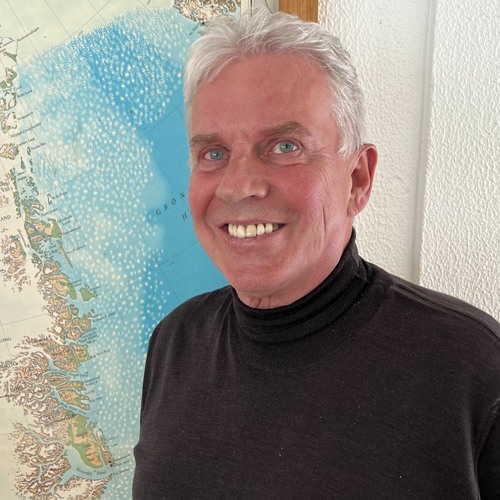
Fridrik Adolfsson is a name that resonates within Iceland’s engineering community, representing dedication, technical excellence, and family values. Born during a pivotal moment in Icelandic history, Fridrik Adolfsson became a respected surveying and construction engineer whose work helped shape modern Iceland’s infrastructure.
His journey from a young student in Reykjavik to a skilled professional in Germany and back home again tells a story of perseverance, innovation, and the pursuit of knowledge. This comprehensive biography explores every aspect of Fridrik Adolfsson’s life, career, family, and lasting impact.
Table of Contents
Quick Bio
| Attribute | Details |
|---|---|
| Full Name | Fridrik Adolfsson |
| Date of Birth | June 6, 1944 |
| Place of Birth | Reykjavik, Iceland |
| Date of Death | April 5, 2016 |
| Age at Death | 71 years old |
| Nationality | Icelandic |
| Profession | Surveying Engineer, Civil Engineer (Byggingaverkfræðingur) |
| Education | Menntaskólinn í Reykjavík (1964) Technische Universität Braunschweig (1967) Karlsruher Institut für Technologie – Diploma in Surveying Engineering (1976) |
| Known For | Vestfjarðagöng Tunnel Project, Precision Engineering |
| Father | Adolf Guðmundsson (1917-1965), Head Teacher |
| Mother | Guðríður Oktavía Egilsdóttir (1920-living), Teacher |
| Siblings | Þórður Adolfsson (brother) |
| Spouse | Miriam Rubner (m. 1977, divorced) |
| Partner | Elke Herrel (psychologist) |
| Children | Agla Jael Rubner Kjartan Jónatan Rubner Egill Moran Rubner |
| Grandchildren | Dagur Benjamín Rubner |
| Residence | Faxaskjól 26, Reykjavik, Iceland |
| Career Highlights | Íslenski Aðalverktakinn Keflavík Air Base Engineer Forverk Independent Consultant (1994-2016) |
| Net Worth | Not publicly disclosed |
| Social Media | No known social media presence |
| Notable Skills | Advanced Surveying, Geodetic Calculations, Photography, Mechanical Repairs |
Who is Fridrik Adolfsson? Early Life and Background
Fridrik Adolfsson was born on June 6, 1944, in Reykjavik, Iceland, during one of the most significant periods in Icelandic history. His birth came just days before Iceland officially became an independent republic, ending centuries of Danish rule. This historical context would later influence his perspective on national development and infrastructure.
Family Heritage and Parents
Fridrik was born into an educated family that valued learning and service. His father, Adolf Guðmundsson, was a distinguished head teacher (yfirkennari) born on July 7, 1917. Adolf passed away on August 26, 1965, when Fridrik was only 21 years old. His mother, Guðríður Oktavía Egilsdóttir, was a dedicated teacher born on January 10, 1920. She outlived her son and continued to be a pillar of strength for the family.
The family was deeply rooted in Christian values, influenced by the legacy of Reverend Friðrik Friðriksson, the founder of KFUM (the Icelandic YMCA), who had fostered Adolf. This spiritual and moral foundation would shape Fridrik Adolfsson’s character throughout his life.
Fridrik had one brother, Þórður Adolfsson, who also survived him. The brothers shared a close bond growing up in post-war Iceland.
Childhood Home: Faxaskjól 26
When Fridrik was just three years old, his parents built a house at Faxaskjól 26 in Reykjavik. This address would become synonymous with Fridrik’s identity. The Faxaskjól neighborhood was a developing area in the capital, filled with young families building their futures in the newly independent nation.
Faxaskjól 26 wasn’t just a house; it became Fridrik’s lifelong anchor. Even after years of living abroad in Germany, he always considered this his true home. The residence witnessed his childhood adventures, his academic achievements, his family life, and ultimately, it was where he spent his final days in April 2016.
Elementary Education at Melaskóli
Like other children in the Faxaskjól neighborhood, young Fridrik attended Melaskóli, the local elementary school. Here, he demonstrated early signs of the analytical mind that would later define his career. Teachers noted his ability to solve complex problems and his natural curiosity about how things worked.
Education Journey: From Reykjavik to Germany
Early International Experience
Fridrik’s educational path took an unexpected turn when his father, Adolf, received an opportunity to pursue further studies in Kiel, Germany. The entire family made the significant decision to relocate, giving young Fridrik an invaluable international experience.
During one winter in Kiel, Fridrik attended a German school where he quickly adapted to a new language and culture. This immersion in German society proved transformative. He learned to speak German fluently, absorbed German cultural values, and developed such proficiency that he later reported dreaming in German. This early exposure laid the groundwork for his future academic pursuits in Germany and shaped his appreciation for German precision and engineering excellence.
Menntaskólinn í Reykjavík (MR)
After returning to Iceland and completing his elementary education, Fridrik enrolled in Menntaskólinn í Reykjavík (MR), one of Iceland’s most prestigious secondary schools. The school, commonly abbreviated as MR, has educated many of Iceland’s leaders, professionals, and intellectuals since its founding in 1846.
Fridrik thrived at MR during the early 1960s. He enjoyed both the rigorous academic curriculum and the social aspects of school life. During these formative years, he cultivated friendships that would last his entire life. His classmates remembered him as intelligent, kind, and always ready to help others understand difficult concepts.
In 1964, Fridrik graduated from MR with his student degree (stúdentspróf), qualifying him for university-level studies. His strong performance in mathematics and sciences pointed toward an engineering career.
University Studies in Germany
Braunschweig: The Foundation (1964-1967)
After graduation, Fridrik returned to Germany to pursue higher education in surveying engineering (mælingaverkfræði). He enrolled at the Technische Universität Braunschweig, one of Germany’s oldest technical universities, founded in 1745.
Braunschweig provided Fridrik with rigorous training in geodesy, measurement technology, and mathematical principles. The first phase of his engineering education lasted from 1964 to 1967, during which he completed the preliminary examination (Vorprüfung) and fundamental coursework. Living in Germany during these years, Fridrik fully integrated into German academic life while maintaining his Icelandic identity.
Karlsruhe: Advanced Specialization (1967-1976)
For the advanced phase of his engineering studies, Fridrik moved to Karlsruhe, home to the Karlsruher Institut für Technologie (KIT), one of Europe’s leading technical research universities. At Karlsruhe, he specialized in surveying engineering and geodetic science.
The period from 1967 to 1976 encompassed both his studies and practical work experience in Germany. In 1976, Fridrik successfully completed his diploma examination in surveying engineering (Vermessungsingenieur). This qualification represented the pinnacle of technical education in his field, equivalent to a master’s degree in surveying and geodesy.
During his time at Karlsruhe, Fridrik gained expertise in:
- Advanced measurement techniques
- Geodetic calculations and modeling
- Construction surveying
- Civil engineering applications
- Computer-aided design (emerging technology in the 1970s)
Fridrik lived in Germany for over a decade, working while completing his studies. This extended period abroad enriched his technical knowledge while strengthening his connection to both German and Icelandic cultures.
Professional Career: Engineering Excellence in Iceland
Return to Iceland with Cutting-Edge Knowledge
In the mid-1970s, armed with the latest developments in surveying engineering from German universities, Fridrik returned to Iceland. His timing was perfect. Iceland was experiencing rapid development and modernization, requiring skilled engineers to design and implement infrastructure projects.
Fridrik brought with him not just theoretical knowledge but practical expertise in the most advanced measurement and surveying techniques available. His German training emphasized precision, systematic approaches, and innovative problem-solving—qualities that would define his professional reputation.
Íslenski Aðalverktakinn (Icelandic Main Contractor)
Fridrik began his professional career in Iceland with Íslenski Aðalverktakinn, one of the country’s major construction companies. Here, he applied his surveying skills to various building and infrastructure projects across Iceland. His work involved:
- Site surveying and measurement
- Construction planning and layout
- Quality control and verification
- Coordination with architects and builders
- Ensuring projects met precise specifications
Colleagues appreciated Fridrik’s meticulous approach and his ability to solve complex measurement challenges that arose during construction.
Engineering Work at Keflavík Air Base
During a portion of his career, Fridrik worked as an engineer at the U.S. Naval Air Station in Keflavík. The American military base, which operated from 1951 to 2006, employed many Icelandic professionals in various capacities.
Working at Keflavíkurflugvöllur (Keflavík Airport) exposed Fridrik to large-scale aviation and military infrastructure projects. The precision requirements for airport and defense installations aligned perfectly with his training and temperament. This experience also connected him with international standards and practices in construction and surveying.
Forverk: Major Projects Phase
Fridrik later joined Forverk, another significant Icelandic construction and engineering firm. During this period, he worked on some of his most challenging and rewarding projects.
The Vestfjarðagöng Tunnel Project
One of Fridrik’s most notable achievements came during the planning and construction of the Vestfjarðagöng (Westfjords Tunnel). This ambitious infrastructure project aimed to improve transportation in Iceland’s remote western peninsulas by creating tunnels through mountainous terrain.
The project presented extraordinary technical challenges:
- Tunneling from both sides of a mountain
- Ensuring both excavation teams would meet precisely in the middle
- Accounting for geological variations
- Maintaining exact measurements over long distances and difficult conditions
Fridrik tackled what seemed impossible: creating a comprehensive measurement model for the tunnel without computers. In the era before sophisticated surveying software became standard, he manually calculated the complex geodetic equations necessary to ensure the two tunnel bores would meet accurately.
When the advanced computers at Karlsruhe University later verified his calculations, they confirmed his work was correct. Fridrik experienced tremendous pride and anticipation when the final blast from the western approach was made. Everything aligned perfectly—the tunnel sections met as planned, a testament to his mathematical precision and engineering skill.
This project exemplified Fridrik’s approach: combining theoretical knowledge, practical experience, and meticulous attention to detail to achieve seemingly impossible results.
Independent Consulting (1994-2016)
In 1994, Fridrik made the decision to work independently as a consulting civil engineer and surveyor (byggingaverkfræðingur). This move reflected his confidence in his abilities and his desire for greater professional autonomy.
As an independent consultant, Fridrik worked with various Icelandic companies on diverse projects:
- Building surveying and inspection
- Construction project planning
- Measurement verification
- Technical consulting for complex engineering challenges
- Quality assurance for construction projects
His final years of professional work maintained his reputation for excellence. Even as construction technology evolved with GPS, laser scanning, and advanced software, Fridrik adapted while maintaining his commitment to fundamental principles of accuracy and integrity.
Personal Life: Family, Marriage, and Relationships
Marriage to Miriam Rubner
On August 30, 1977, Fridrik married Miriam Rubner, a preschool teacher (leikskólakennari) born on July 4, 1949. Their marriage brought together two professionals dedicated to education and development—Fridrik in the physical infrastructure of Iceland, Miriam in the foundational education of its youngest citizens.
Children: The Next Generation
Fridrik and Miriam had three children together, each given names reflecting both Icelandic and international influences:
1. Agla Jael Rubner – Their daughter, whose name combines the Icelandic “Agla” with the biblical “Jael”
2. Kjartan Jónatan Rubner – Their elder son, who would later share his father’s interest in technical fields
3. Egill Moran Rubner – Their younger son, named with the traditional Icelandic “Egill”
Fridrik was a devoted father who valued time with his children. He believed that working together on projects, whether academic or practical, created the best opportunities for connection and teaching.
Special Bond with Grandson Dagur
Fridrik’s grandson, Dagur Benjamín Rubner, son of Kjartan and Sigríður Ásdís Jónasdóttir, brought immense joy to his later years. Dagur became “a ray of sunshine” in Fridrik’s life, as family members recalled. The grandfather-grandson relationship gave Fridrik particular happiness, allowing him to share his love of learning and problem-solving with a new generation.
Life After Divorce
Fridrik and Miriam eventually divorced, though they maintained respect for each other as co-parents of their children. Fridrik continued living at his beloved Faxaskjól 26, the home where he had grown up and which remained his constant throughout life’s changes.
Relationship with Elke Herrel
In his later years, Fridrik found companionship with Elke Herrel, a psychologist (sálfræðingur). Elke shared Fridrik’s intellectual curiosity and appreciation for both scientific thinking and human complexity. Their relationship brought him comfort and partnership during his final years.
Elke’s background in psychology complemented Fridrik’s engineering mindset—where he saw problems to solve through calculation and logic, she understood the human emotional landscape. Together they enjoyed discussions ranging from technical topics to philosophical questions about life and meaning.
Personal Characteristics and Interests
The Mind of a Problem-Solver
Fridrik possessed what colleagues and family called “the mind of a problem-solver.” He approached life’s challenges with the same systematic methodology he applied to engineering:
- Understand the problem completely
- Break it down into component parts
- Analyze each element
- Develop potential solutions
- Test and verify the approach
- Implement the solution
This wasn’t just a professional approach—it defined how Fridrik lived. Whether facing a complex tunnel surveying challenge or a broken washing machine at home, he applied the same thoughtful process.
Practical Skills and Resourcefulness
Beyond his professional engineering expertise, Fridrik was remarkably handy and resourceful. He enjoyed working with his hands and could repair almost anything:
- Automotive repairs: He maintained and repaired cars for himself and his children, understanding mechanical systems intuitively
- Household appliances: Family members fondly recalled how he once combined parts from two broken washing machines to create one working unit
- Tool modification: He constantly thought about how to improve the design of tools and equipment he used
Fridrik found genuine joy in taking things apart to understand their mechanisms, identifying problems, and reassembling them better than before. This hands-on engagement with the physical world balanced his abstract mathematical work.
Photography and Artistic Vision
Fridrik was an accomplished photographer who combined technical skill with artistic sensibility. Unlike photographers focused solely on technical excellence or equipment, Fridrik photographed people and human experiences. He had:
- A keen eye for capturing authentic moments
- Sensitivity to light, composition, and emotional content
- Interest in documenting family life and relationships
- Appreciation for the colorful, complex nature of human existence
His photography revealed a side of Fridrik that complemented his engineering precision—an aesthetic sense and emotional awareness that valued beauty and human connection.
Openness to Technology and Innovation
Throughout his life, Fridrik maintained what family described as “the open-mindedness of a young person” regarding new technology. When he first encountered an early Hewlett-Packard calculator—one of the first portable computing devices for engineers—he reacted with childlike wonder and fascination.
This enthusiasm for technological innovation never faded. Even as he aged, Fridrik remained curious about new developments, from computer technology to modern surveying equipment. He understood that tools evolved, but fundamental principles remained constant.
Cultural Appreciation
Living in Germany for over a decade profoundly influenced Fridrik’s cultural perspective. He valued:
- German engineering precision and methodology
- Classical music and arts
- International perspectives on problems
- Cross-cultural understanding
Yet he remained deeply Icelandic at heart, with strong connections to his homeland’s landscape, language, and values.
Values and Personal Philosophy
Foundation in Christian Ethics
Raised in the tradition established by Reverend Friðrik Friðriksson (founder of KFUM/YMCA Iceland), Fridrik’s ethical framework emphasized:
- Integrity and honesty in all dealings
- Service to others and community
- Continuous self-improvement
- Responsibility and reliability
These weren’t abstract principles for Fridrik—they guided his daily actions and professional conduct.
Commitment to Family
As Fridrik aged, family became increasingly central to his life. He didn’t just want to be present; he wanted to be involved and useful. Whether helping children with challenging projects or simply being available when needed, Fridrik demonstrated that love manifested through presence and action.
His philosophy of working together on projects—whether changing a roof or solving homework problems—reflected his belief that shared effort created both better results and stronger relationships.
Self-Awareness and Growth
Fridrik understood his own imperfections and limitations. He was, as friends noted, “painfully self-aware” of his internal struggles and personal flaws. Rather than denying these challenges, he worked to manage them, particularly his intense emotions and inner fire.
This self-awareness grew deeper with age, leading him to focus more intentionally on what truly mattered: relationships, meaningful work, and personal integrity.
Openness to Diversity
Despite coming from a specific cultural and religious background, Fridrik approached people of different backgrounds, beliefs, and experiences without fear or judgment. He valued:
- Learning from those with different perspectives
- Understanding various traditions and ideas
- Holding firmly to his own values while respecting others
- Bridging differences through genuine human connection
This openness reflected both intellectual curiosity and genuine respect for human dignity.
How Old Was Fridrik Adolfsson? Timeline of Life
June 6, 1944 – Born in Reykjavik, Iceland (Age 0)
1947 – Family moves to Faxaskjól 26 (Age 3)
Early 1950s – Attends elementary school at Melaskóli (Ages 6-12)
Mid-1950s – One year in Kiel, Germany with family (Age ~10-11)
1964 – Graduates from Menntaskólinn í Reykjavík (Age 20)
1964-1967 – Studies at Braunschweig, Germany (Ages 20-23)
1965 – Father Adolf Guðmundsson passes away (Age 21)
1967-1976 – Advanced studies at Karlsruhe, Germany (Ages 23-32)
1976 – Completes engineering diploma (Age 32)
1977 – Marries Miriam Rubner (Age 33)
Late 1970s-1980s – Children born: Agla, Kjartan, Egill (Ages 33-40)
1970s-1990s – Works for Icelandic companies and at Keflavik (Ages 32-50)
1994 – Begins independent consulting practice (Age 50)
Late 1990s-2000s – Grandson Dagur born (Age ~50s)
2000s – Divorce from Miriam; relationship with Elke Herrel (Age 60s)
2006-2016 – Continues engineering work and family focus (Ages 62-71)
April 5, 2016 – Passes away at home in Faxaskjól 26 (Age 71)
Fridrik Adolfsson lived for 71 years, 10 months, experiencing post-war Iceland’s transformation, international education, professional success, family joys and challenges, and ultimately a peaceful passing at his lifelong home.
Social Media and Online Presence
Fridrik Adolfsson’s life spanned from 1944 to 2016, meaning his adult years occurred before the social media revolution. There is no evidence of Fridrik maintaining personal social media accounts on platforms like Facebook, Instagram, LinkedIn, or Twitter.
This absence reflects both his generation and his personality. Born in the pre-digital era and trained when engineering meant paper calculations and mechanical drafting, Fridrik adapted to computer technology in his work but didn’t pursue online social networking.
His professional reputation was built through:
- Direct personal relationships
- Work quality and word-of-mouth recommendations
- Professional networks in Iceland’s engineering community
- Traditional business relationships
Any online mentions of Fridrik Adolfsson today primarily consist of memorial pages, genealogical records, and professional documentation rather than personal social media profiles.
Physical Appearance and Personal Presence
Detailed descriptions of Fridrik Adolfsson’s physical appearance are limited in public records, but family recollections paint a picture of his presence and demeanor:
Physical Characteristics
Based on available information and Icelandic male averages of his generation, Fridrik likely stood around 5’9″ to 5’11” (175-180 cm) with a build that reflected his active, hands-on approach to work and life.
Notable Features
Those who knew Fridrik remembered:
- Expressive eyes that “sparkled” when engaged with new ideas or interesting challenges
- Animated presence when discussing technical problems or family matters
- Warm demeanor that made people comfortable seeking his help
Personal Style
Fridrik’s presentation reflected his professional identity:
- Practical, functional clothing appropriate for someone who moved between office work and job sites
- Neat appearance consistent with his methodical nature
- No-nonsense approach that prioritized substance over style
Presence and Energy
More than physical appearance, people recalled Fridrik’s energy and engagement:
- Quick to read situations and people
- Intellectually sharp and attentive
- Emotionally present and responsive
- Capable of intense focus on problems
His grandson Dagur brought out a particularly warm and joyful side of his personality, described as radiating like sunshine—revealing the gentler, more playful aspects of his character.
Fridrik Adolfsson Net Worth and Financial Information
No public records exist detailing Fridrik Adolfsson’s net worth or specific financial assets. As a professional engineer and consultant in Iceland, his economic situation can be understood in general terms:
Professional Income Sources
Throughout his career, Fridrik earned income from:
- Salaried positions with Icelandic construction companies (1970s-1994)
- Engineering work at Keflavik Air Base (specific period unclear)
- Independent consulting as a civil engineer (1994-2016)
Economic Context
In Iceland during Fridrik’s working years (1976-2016):
- Engineers and technical professionals earned middle to upper-middle-class incomes
- Independent consultants could achieve comfortable financial stability
- Iceland’s small economy meant income ranges were more compressed than in larger countries
Assets and Investments
Known assets include:
- Family home at Faxaskjól 26, Reykjavik (owned by parents, later Fridrik)
- Professional equipment and tools
- Personal vehicles that he maintained himself
Financial Values
Rather than accumulating significant wealth, Fridrik’s values emphasized:
- Financial stability sufficient to support his family
- Independence through consulting work
- Investment in education and experiences
- Practical resourcefulness over material accumulation
It’s important to note that Fridrik’s worth cannot be measured primarily in financial terms. His legacy consists of:
- Engineering projects that continue serving Iceland
- Knowledge passed to students and colleagues
- Family relationships and values
- Professional reputation for excellence and integrity
Legacy and Remembrance
Professional Impact
Fridrik Adolfsson’s engineering work contributed to Iceland’s modern infrastructure development during crucial decades. Projects like the Vestfjarðagöng tunnel continue serving travelers and communities, standing as physical testaments to his skill and dedication.
Beyond specific projects, Fridrik influenced the profession through:
- Bringing German engineering precision to Icelandic practice
- Mentoring younger engineers and colleagues
- Demonstrating that complex problems could be solved through systematic thinking
- Maintaining high standards even as technology evolved
Family Legacy
For his children and grandson, Fridrik’s legacy includes:
- A model of curiosity and lifelong learning
- The value of working together on challenging projects
- Importance of family presence and involvement
- Balance between professional excellence and personal relationships
His son Kjartan’s decision to study computer science and their time working together on assignments exemplified the generational transmission of intellectual values Fridrik cherished.
Personal Qualities Remembered
Those who knew Fridrik remembered him as:
- Honest and reliable – keeping his word and maintaining integrity
- Intellectually curious – never stopping his pursuit of knowledge
- Generous with his time – available when people needed help
- Emotionally deep – capable of intense feeling alongside analytical thinking
- Humble yet confident – aware of his abilities without arrogance
Memorial Service and Final Farewell
Fridrik passed away suddenly at his home in Faxaskjól 26 on April 5, 2016. His memorial service, held at Neskirkja (Nes Church) in Reykjavik, brought together family, friends, colleagues, and community members.
Reverend Sigurður Árni Þórðarson delivered the eulogy, emphasizing:
- Fridrik’s problem-solving genius and dedication
- His journey from Icelandic student to German-trained engineer
- The complexity and beauty of his personality
- His growth toward focusing on family and core values
- A theological reflection on God as the ultimate problem-solver
The service celebrated a life well-lived—not perfect, but authentic, useful, and meaningful.
FAQs About Fridrik Adolfsson
Who was Fridrik Adolfsson?
Fridrik Adolfsson was an Icelandic surveying and civil engineer known for his precision work and major infrastructure projects.
What is Fridrik Adolfsson best known for?
He is best known for his role in the Vestfjarðagöng Tunnel Project and his contribution to modern Icelandic infrastructure.
Where did Fridrik Adolfsson study engineering?
He studied at Menntaskólinn í Reykjavík and later specialized in surveying engineering at universities in Braunschweig and Karlsruhe, Germany.
Did Fridrik Adolfsson have a social media presence?
No, he had no known social media accounts, reflecting his pre-digital generation and private nature.
What is Fridrik Adolfsson’s legacy?
His legacy lives on through lasting engineering projects, professional integrity, and strong family values.
Conclusion
Fridrik Adolfsson’s biography reveals a man who exemplified the best qualities of his profession and his era. Born as Iceland achieved independence, he contributed to building the nation’s physical infrastructure while maintaining deep personal connections and intellectual curiosity.
From childhood in Faxaskjól through education in Germany to professional achievement in Iceland, Fridrik demonstrated that excellence comes from:
- Thorough preparation and continuous learning
- Systematic approaches to complex problems
- Balance between technical precision and human warmth
- Commitment to family alongside professional dedication
- Openness to new ideas while holding core values
His story reminds us that significance isn’t measured solely in fame or wealth, but in work done well, relationships nurtured carefully, and values lived consistently.
Fridrik Adolfsson lived 71 years, leaving behind completed projects, grateful family members, respected colleagues, and a model of how to approach life with both rigor and heart. The tunnels he surveyed still carry traffic through Iceland’s mountains, but perhaps his most enduring legacy lives in the people he influenced—children, grandchildren, students, and colleagues who learned from his example.
In an age increasingly dominated by speed and superficiality, Fridrik’s life stands as testimony to the value of precision, depth, patience, and human connection. He was, as the memorial service concluded, not just an engineer of structures but a builder of relationships and a seeker of truth in all its forms—technical, moral, and spiritual.
Though he passed in 2016, Fridrik Adolfsson’s influence continues wherever people value excellence, integrity, family, and the quiet satisfaction of solving complex problems well.